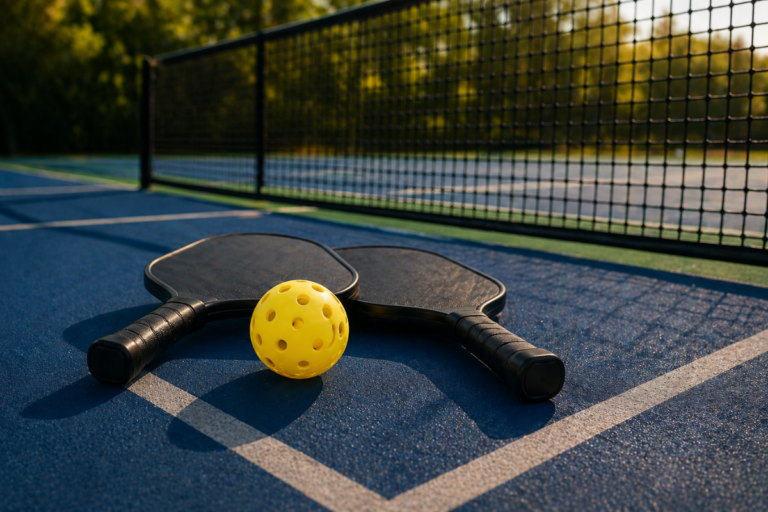


Pickleball is easy to learn, but becoming a skilled player takes more than simply hitting the ball hard. Strong players understand positioning, control the pace of a rally, communicate with their partner, and know when to attack.
The sport is also growing quickly in Davao City. Local clubs, indoor courts, coaching sessions, and tournaments now give beginners more opportunities to practice and compete. If you recently picked up a paddle or want to move beyond casual games, these pickleball tips for beginners will help you build the habits of a more advanced player.
1. Master the rules before learning advanced shots
Before working on spin or powerful drives, make sure you understand the basic rules. Learn how serving works, when the ball must bounce, how scoring is called, and what you can and cannot do inside the non-volley zone, commonly called the kitchen.
One of the most important rules is the two-bounce rule. After the serve, the receiving team must let the ball bounce before returning it. The serving team must also let that return bounce before hitting the next shot. After those two bounces, either team may volley the ball.
Knowing the rules removes hesitation and lets you focus on strategy during a rally.
2. Develop a reliable serve
Your serve does not need to be extremely fast. It needs to land in the correct service area consistently. A missed serve immediately gives your opponent the ball without making them earn the point.
Start with a smooth, controlled motion. Aim deep toward the back of the service box to keep your opponent behind the baseline. Once you can make eight or nine out of ten serves, begin practicing different placements and speeds.
Consistency comes first. Power should come later.
3. Return the serve deep
A deep return gives you time to move toward the kitchen line while forcing the serving team to hit their third shot from farther back. Avoid rushing your return or aiming too close to the sideline.
Use a controlled swing and send the ball high enough to travel deep into the court. After making contact, move forward immediately. Do not remain near the baseline and watch your shot.
4. Get comfortable at the kitchen line
Many points are won near the non-volley line because this position allows you to take time away from your opponents and cover more angles. New players often stay too far back, leaving open space in front of them.
Move toward the kitchen line when it is safe to do so. Keep your knees slightly bent, hold your paddle in front of your body, and stay balanced. Avoid standing directly on the line because your momentum may carry you into the kitchen after a volley.
5. Practice the dink
A dink is a soft shot that lands inside your opponent’s kitchen. It may look simple, but it is one of the most valuable shots in pickleball. A good dink prevents opponents from attacking and encourages them to make a mistake or lift the ball too high.
Keep your grip relaxed and use a gentle lifting motion. Practice hitting both cross-court and straight-ahead dinks. Your goal is not to win the point immediately. Your goal is to create the right ball to attack.
6. Learn an effective third-shot drop
The serving team normally begins at a positional disadvantage because it must let the return bounce. A controlled third-shot drop can help the serving team move from the baseline toward the kitchen.
Aim for a soft, arcing shot that clears the net and lands in the opponent’s non-volley zone. Do not rush forward until you see that the shot is low enough to prevent an aggressive reply. If the drop is too high, pause and prepare to defend.
This shot takes patience. Include it in every practice session instead of expecting to master it during competitive games.
7. Keep your paddle ready
Fast exchanges near the net leave very little reaction time. Hold your paddle in front of your chest instead of letting it hang by your side. Use short, compact movements and return to the ready position after every shot.
Pay attention to your opponent’s paddle angle. It can give you an early clue about the direction and height of the next ball.
8. Choose placement over power
Hard shots can be useful, but uncontrolled power often leads to balls going into the net or out of bounds. Smart players target open space, an opponent’s backhand, the feet, or the middle area between two players.
Before every shot, ask yourself what result you want. Are you trying to move your opponent, slow down the rally, or create an attackable ball? Purposeful placement will win more points than hitting hard without a plan.
9. Communicate with your doubles partner
Good communication prevents confusion, especially when the ball travels through the middle. Call “mine,” “yours,” “out,” or “bounce” clearly and early. Discuss who will take middle balls and how you will handle lobs before the match begins.
Move together as a team. When one partner advances, the other should normally move forward too. Large gaps between partners give opponents easy targets.
10. Follow a simple weekly practice plan
Playing matches is enjoyable, but drills give you more repetitions in less time. Try this beginner-friendly weekly plan:
- Day 1: 15 minutes of serves, 15 minutes of returns, and 20 minutes of dinks
- Day 2: Footwork, volleys, and third-shot drops
- Day 3: Practice games focused on positioning and shot selection
- Optional session: Coaching, open play, or a friendly match with stronger players
Track one skill each week. For example, count how many serves out of 20 land deep or how many consecutive dinks you can maintain. Small, measurable improvements will keep your training focused.
How to become a competitive pickleball player
If your goal is to play at a competitive or professional level, build a strong foundation first. Join organized open-play sessions, work with a qualified coach, record some matches, and review where you lose points. Competing against different playing styles will teach you how to adjust under pressure.
You should also improve your mobility, balance, and recovery. Wear proper court shoes, warm up before playing, drink enough water, and allow your body to rest. In Davao’s warm climate, hydration and heat management are especially important, even when playing in a covered venue.
When you are ready for rated competition, create a DUPR profile and learn how local tournament divisions work. Davao City’s 2026 Duaw Dabaw pickleball competition, for example, used rating-based categories for intermediate and open players.
Find pickleball courts and coaches in Davao City
Davao has a growing pickleball community with indoor and outdoor venues, clubs, coaching clinics, and open-play schedules. Practicing with better players is one of the fastest ways to recognize weak habits and improve your decision-making.
Use CZORS to discover nearby pickleball courts, compare available services, and book a session that fits your schedule. Whether you are playing your first game or preparing for a tournament, consistent practice is what turns basic skills into confident play.
Ready to improve your game? Find and book pickleball courts near you on CZORS.
Frequently asked questions
How long does it take to become good at pickleball?
Most beginners can become comfortable with the rules and basic shots within a few weeks. Reaching an intermediate or competitive level may take several months or longer, depending on how often you train and the quality of your practice.
What should a beginner practice first?
Begin with serving, returning, basic footwork, and court positioning. Once those skills become consistent, add dinks, volleys, and third-shot drops.
Do I need an expensive paddle to improve?
No. A comfortable, regulation paddle is enough for learning. Coaching, regular practice, and smart shot selection usually have a greater effect on improvement than buying the most expensive equipment.
Where can beginners play pickleball in Davao City?
Davao City has clubs, community courts, and dedicated pickleball venues that offer rentals, coaching, and open play. Check current schedules and beginner requirements directly with the venue before visiting.
Ready to book?
Discover trusted CZORS providers and services near you.
Find Nearby Services